Getting Started with Next.js 14
Next.js 14 represents a significant milestone in the evolution of React-based web development. With enhanced performance, improved developer experience, and powerful new features, it's never been a better time to start building with Next.js.
Architecture Overview
Below is the system architecture diagram showing the infrastructure setup:
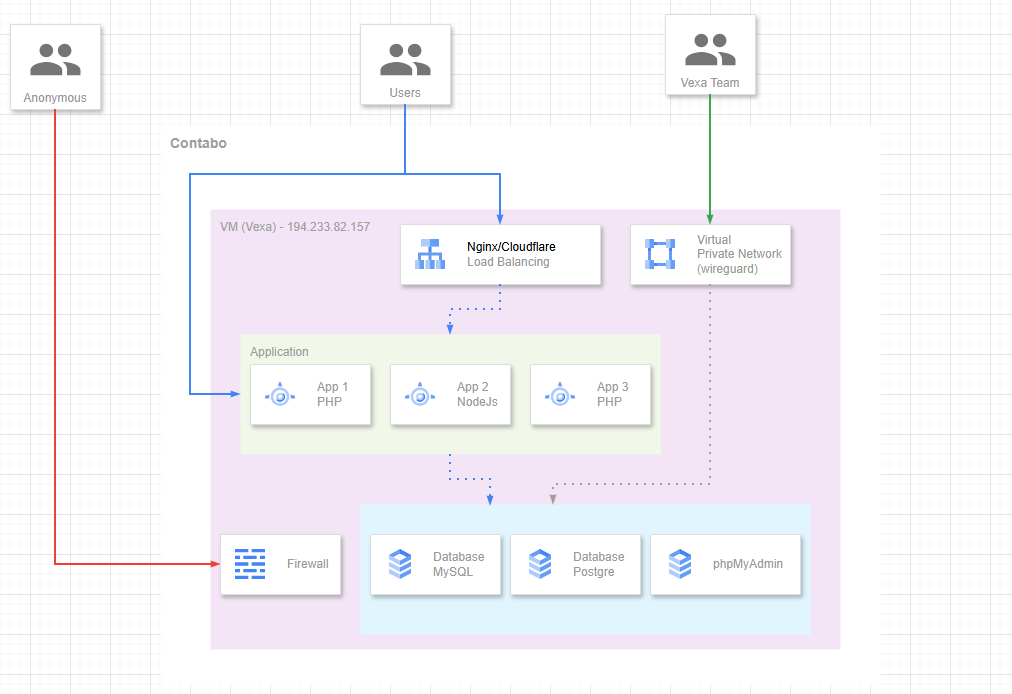
The architecture consists of:
- Load Balancing: Nginx/Cloudflare for distributing traffic
- Virtual Private Network: Wireguard for secure connections
- Application Layer: Multiple PHP and Node.js applications
- Database Layer: MySQL and PostgreSQL databases
- Admin Tools: phpMyAdmin for database management
- Security: Firewall protection for all services
What's New in Next.js 14?
Next.js 14 introduces several exciting features that make building web applications faster and more efficient:
Server Actions
Server Actions provide a powerful way to mutate data on the server without writing API routes. They're built on top of React Server Components and allow you to write server-side code directly in your components.
async function createPost(formData: FormData) {
  'use server'

  const title = formData.get('title')
  const content = formData.get('content')

  // Save to database
  await db.posts.create({ title, content })
}
Partial Prerendering
This experimental feature combines the best of static and dynamic rendering, allowing you to have both static and dynamic content in the same route. The static shell is served immediately, while dynamic content streams in.
Improved Performance
Next.js 14 ships with significant performance improvements:
- Faster local server startup
- Improved Fast Refresh
- Reduced memory usage
- Optimized production builds
Building Your First App
Getting started with Next.js is straightforward. Here's a quick guide:
Installation
npx create-next-app@latest my-app
cd my-app
npm run dev
Project Structure
The new App Router uses a file-system based routing mechanism:
app/- Contains your application routes and layoutspublic/- Static assetscomponents/- Reusable React componentslib/- Utility functions and shared code
Creating Pages
Each folder in the app directory represents a route segment. To create a new page, add a page.tsx file:
// app/about/page.tsx
export default function About() {
  return (
    <div>
      <h1>About Us</h1>
      <p>Welcome to our website!</p>
    </div>
  )
}
Key Concepts
Server Components
By default, all components in the App Router are React Server Components. This means they run on the server and don't add to your client-side JavaScript bundle.
Client Components
When you need interactivity or browser APIs, use the 'use client' directive:
'use client'

import { useState } from 'react'

export default function Counter() {
  const [count, setCount] = useState(0)

  return (
    <button onClick={() => setCount(count + 1)}>
      Count: {count}
    </button>
  )
}
Data Fetching
Fetch data directly in Server Components using async/await:
async function getData() {
  const res = await fetch('https://api.example.com/data')
  return res.json()
}

export default async function Page() {
  const data = await getData()

  return <div>{/* Render your data */}</div>
}
Best Practices
- Use Server Components by default - Only add
'use client'when necessary - Leverage caching - Next.js automatically caches fetch requests
- Optimize images - Use the built-in
Imagecomponent - Implement proper loading states - Use
loading.tsxfor better UX - Handle errors gracefully - Create
error.tsxfiles for error boundaries
Conclusion
Next.js 14 provides a robust foundation for building modern web applications. With its focus on performance, developer experience, and cutting-edge React features, it's an excellent choice for your next project.
Whether you're building a simple blog or a complex web application, Next.js offers the tools and flexibility you need to succeed. Start exploring today and experience the future of web development!
Further Reading
Happy coding!